Dreamforce ran three days at Moscone. On Wednesday, Siemens took the AgentExchange Theater stage to show how their sellers do relationship mapping with ARPEDIO and AI agents inside Salesforce. On Thursday, we won the partner Demo Jam on the same stage, defending the title we took in London in June. The demo ran in the next version of the ARPEDIO platform, with its new interface, for the first time in public.
Dreamforce ran 15–17 September at Moscone in San Francisco. ARPEDIO had two slots in the AgentExchange Theater in Moscone West, a customer session and a competitive demo, and spent the rest of the week in conversations across the campus.
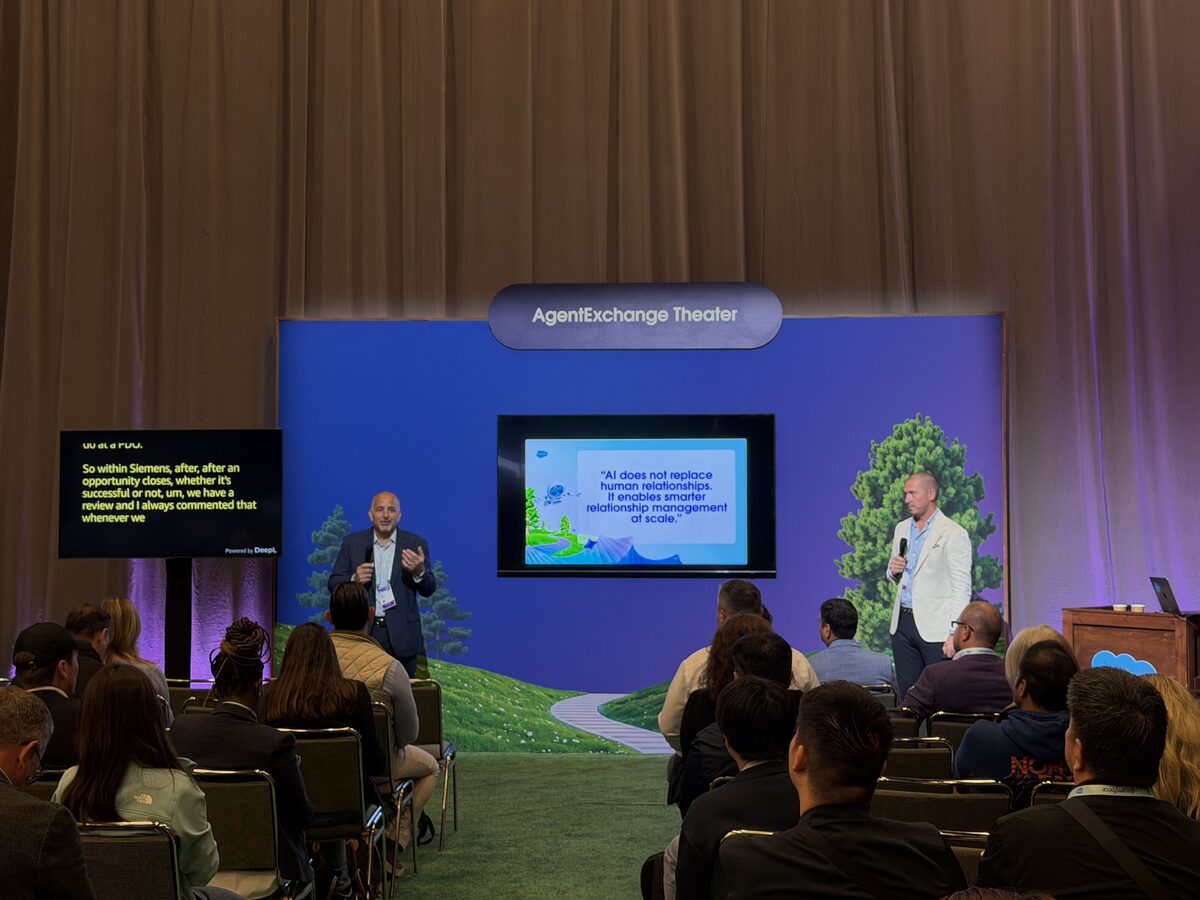
Wednesday morning was session 1982, and Siemens told it themselves. Buying committees at industrial enterprises now run to 15–20+ decision-makers per deal, spread across engineering, IT, procurement, and the executive floor, and their sellers built every relationship map by hand: the blank-canvas problem, multiplied across one of the world's largest sales organizations. ARPEDIO now sits in Siemens' core Salesforce platform, with an AI agent that drafts the org chart from data already in the system — contacts, titles, departments — so sellers start from a draft and spend their time on judgment, not data entry. Relationship mapping at a scale of 40,000 sellers.
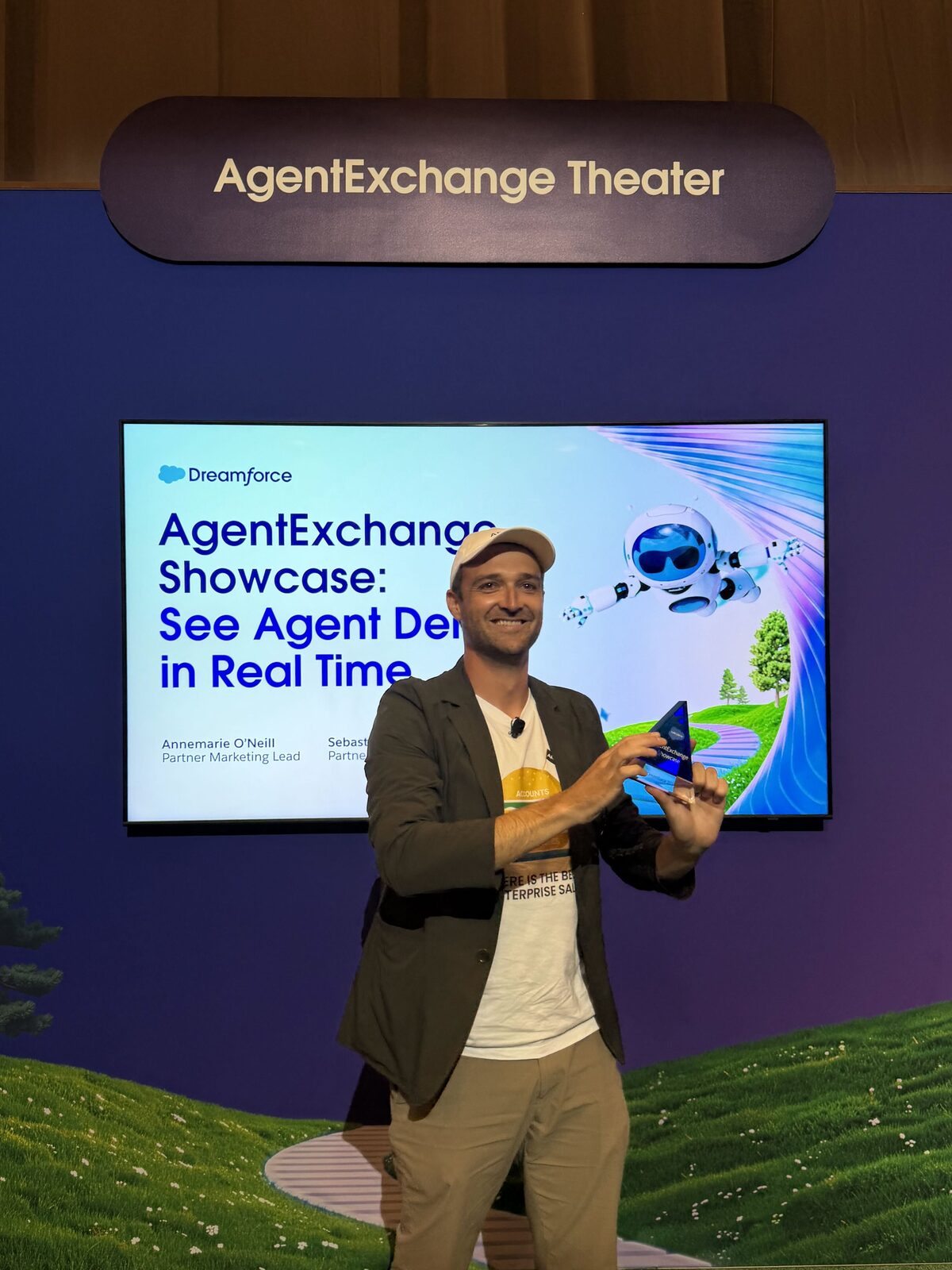
Thursday afternoon was the partner Demo Jam on the same stage. ARPEDIO won it, three months after winning the Demo Jam at the Agentforce World Tour in London.
The takeaway we brought home came from the meetings, not the stage. Nikolaj Lund's read of the week: sales teams will increasingly do their daily work in Slack, with Salesforce and AI models such as Claude as the systems that create and maintain the accounts, plans, relationships, and opportunities underneath. How soon is open. Salesforce's own Claude announcements at Dreamforce make it feel closer than it did in June. The interface moves; the system of record does not. That is the case for keeping relationship data structured inside Salesforce, where any agent can act on it.

Session 1982: Siemens on relationship mapping with ARPEDIO and AI agents, AgentExchange Theater.
The Demo Jam is the format that leaves nowhere to hide. Competing AppExchange partners get a few minutes each, live product only, no slides and no setup videos, and the audience picks the winner on the spot. If the product doesn't land in a few minutes, it doesn't land.
Three partners took the stage on Thursday: TeamViewer, Gainsight, and ARPEDIO.
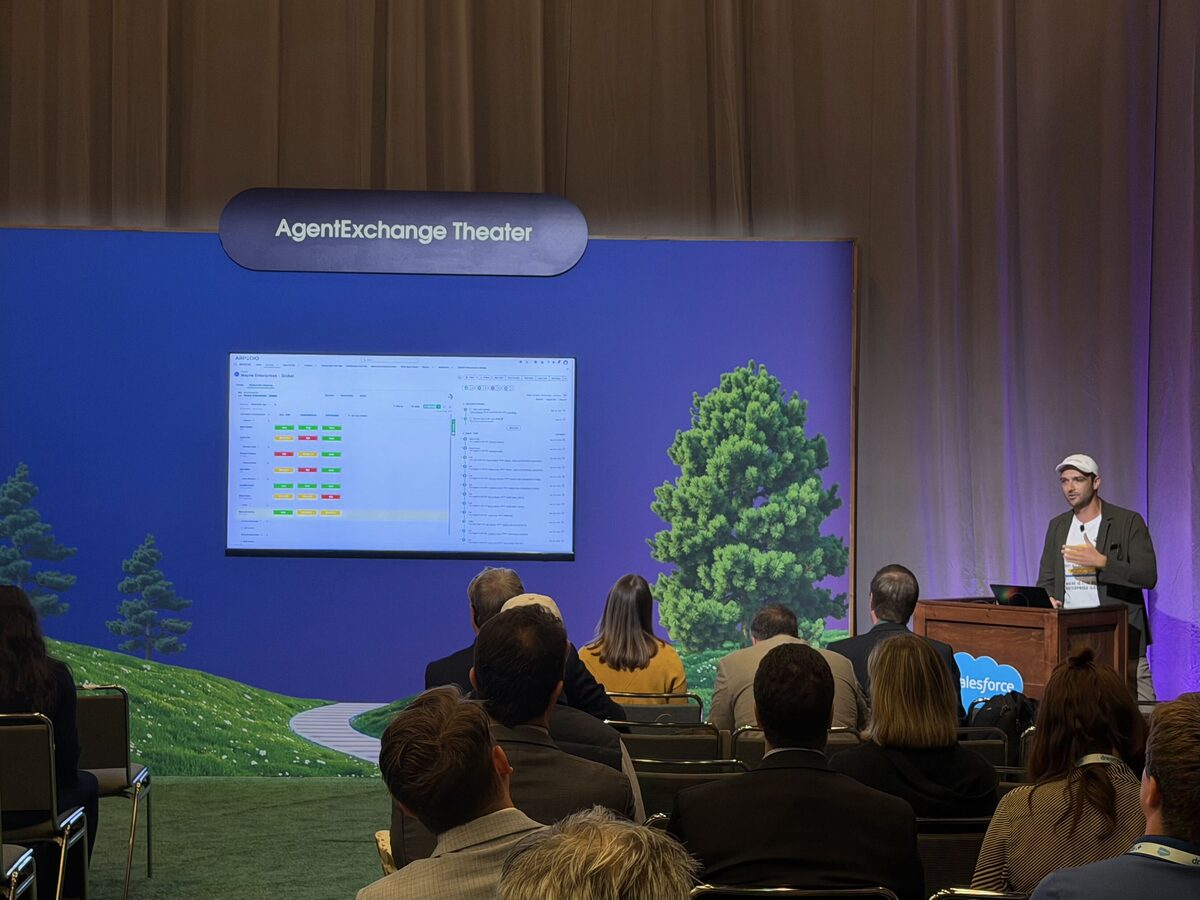
We showed the same thing we showed in London: an account team mapping its relationships into one large account, with the ARPEDIO agent doing the work. It built the account's org chart from scratch. It refreshed an existing chart with the contacts added since the chart was last built. And it flagged where the gaps were.
What was different was the surface. This was the first public outing of the next version of the ARPEDIO platform, with its new interface — the demo ran in it live, in front of a voting room, rather than in a controlled walkthrough.
Couldn't be there? The 5-minute product walkthrough covers the same ground, no form required.
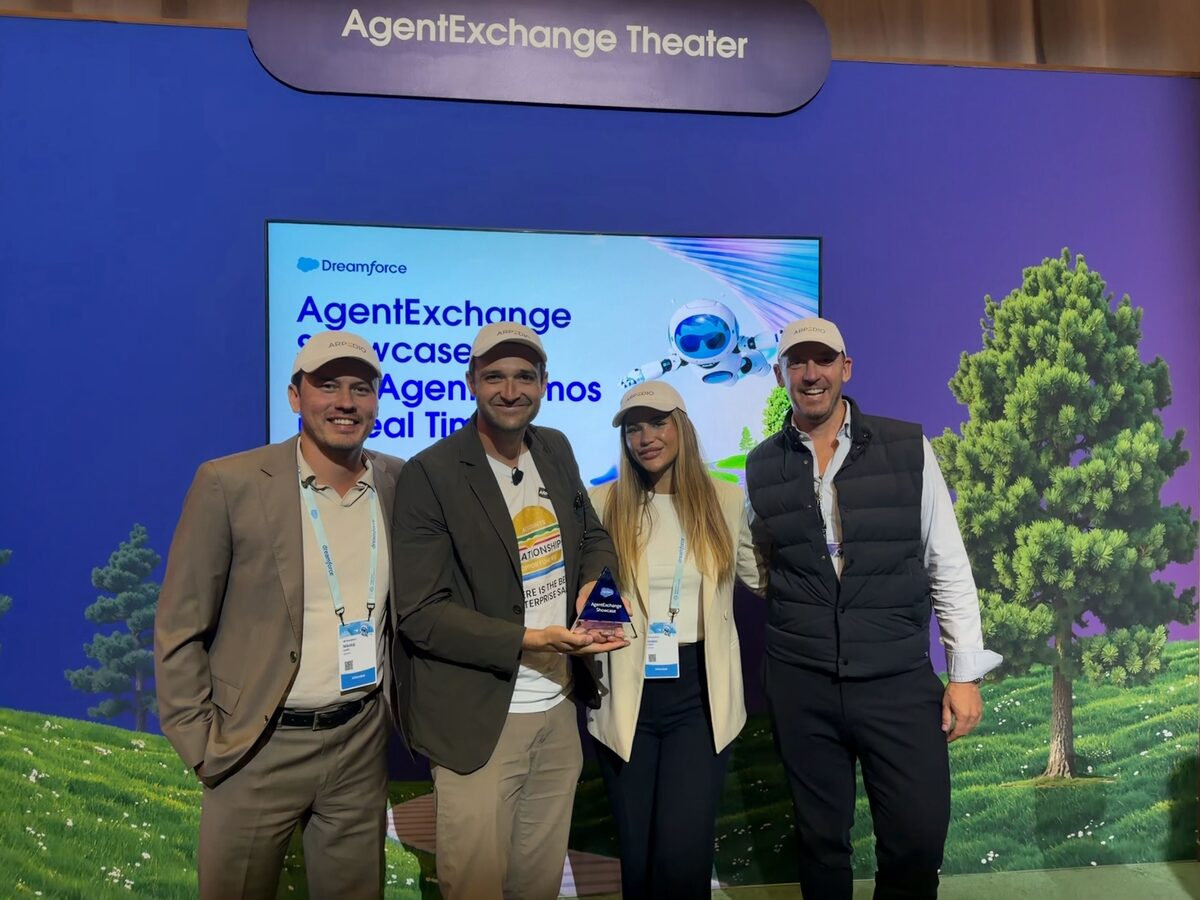
Left to right: Nikolaj Lund, Daniel Kallestrup (VP Partnerships), Josipa Odak, and Ulrik Monberg (CEO, ARPEDIO), after the Demo Jam result in the AgentExchange Theater.
"Agents are only as smart as the relationships underneath them."
ARPEDIO · Demo Jam, Agentforce World Tour London and Dreamforce 2026
What ran on the Demo Jam stage is the next version of the ARPEDIO platform, with a new interface. Here's what that is and when you can have it.
The week is over, the conversations aren't. If you saw one of the sessions, or heard about them secondhand, we'll pick it up from here.
Tell us what you're working on: stakeholder chaos in your biggest accounts, AI agents on Salesforce, what relationship mapping looks like at enterprise scale. We'll bring the right person and, if you want one, a live demo of what ran on the Demo Jam stage.
Meetings are video calls, 30 minutes by default. We reply within one business day.
Two things, both in the AgentExchange Theater in Moscone West. On Wednesday 16 September, Siemens presented session 1982 on how their sellers do relationship mapping with ARPEDIO and AI agents inside Salesforce. On Thursday 17 September, ARPEDIO competed in the partner Demo Jam and won, running the demo in the next version of the ARPEDIO platform, with its new interface, for the first time in public.
A live, head-to-head demo competition between Salesforce AppExchange partners: a few minutes on stage each, live product only, no slides, and the audience picks the winner. ARPEDIO won the Demo Jam at the Agentforce World Tour in London in June 2026 and won again at Dreamforce on 17 September 2026.
Siemens told the story themselves: buying committees at industrial enterprises now run to 15 to 20 or more decision-makers per deal, spread across engineering, IT, procurement, and the executive floor, and their sellers built every relationship map by hand. ARPEDIO is embedded in Siemens' core Salesforce platform, with an AI agent that drafts the org chart from data already in the system, so sellers start from a draft rather than a blank canvas. Relationship mapping at a scale of 40,000 sellers.
ARPEDIO is an Account-Based Selling platform built natively on Salesforce. One platform, three products — Relationship Management, Opportunity Management, and Account Management — with an intelligence layer of AI Agents running across them, for enterprise sales teams managing complex, multi-stakeholder accounts. ISV partner on AppExchange since 2014, with enterprise deployments at companies including Siemens, Sodexo, Airbus Defence & Space, Perstorp, and bioMérieux.
Recording and publication of Dreamforce sessions is Salesforce's call, not ours, so we can't promise a video. This page is the recap. If you want to see the product rather than read about it, the 5-minute walkthrough is on the demo page, no form required.
Agents act on what they can see. In enterprise accounts, that means a structured picture of who matters, how they connect, and where the gaps are — built inside Salesforce, shared by the whole account team.